
You eat a tomato-based pasta. Your gut protests. You assume tomatoes are the problem, cut them out, and call it done.
But here’s what’s worth actually looking at: for most people on a low FODMAP diet, tomatoes aren’t the issue at all. The portion size is. Or the type. Or what else was in the dish.
Let’s get specific.
are tomatoes low fodmap
Are tomatoes low FODMAP?
Yes, in the right amounts. Tomato FODMAP content varies significantly by type and serving size, which is where most people go wrong.
Monash University, the group that developed the FODMAP diet, has tested a range of tomato products. Most are fine in small portions. Some are a problem in larger ones. A few are genuinely high FODMAP regardless.
The confusion comes from treating “tomato” as a single food. Cherry tomatoes, canned tomatoes, sundried tomatoes, and tomato paste all behave differently. Knowing which is which changes how you eat.
Tomato FODMAP breakdown: the full conversion table
| Tomato Type | Low FODMAP Serving | FODMAP Concern at Higher Amounts | Notes |
| Cherry tomatoes | 45g (3 tomatoes) | Moderate fructose at 60g+ | Safe for Phase 1 |
| Common (round) tomatoes | 65g (1 small) | Fructose accumulates | Weigh portions |
| Roma tomatoes | 76g (1 small) | Moderate at larger serves | Usually fine in cooking |
| Canned tomatoes (whole/diced) | 100g | Fructose at higher amounts | Rinse to reduce |
| Tomato paste | 28g (2 tbsp) | High fructose above this | Easy to over-pour |
| Tomato passata | 61g | Fructose concern above 100g | Watch in sauces |
| Sundried tomatoes | 8g (2 pieces) | High fructose, high fructans | Use sparingly |
| Tomato juice | 100ml | Fructose builds quickly | Not a free pour |
| Tomato sauce (ketchup) | 13g (1 tbsp) | Often contains onion/garlic too | Read labels |
Sources: Monash University FODMAP app and FODMAP Friendly testing data.
Cherry tomatoes: the most forgiving option
If you’re reacting to tomatoes and don’t know where to start, cherry tomatoes are the easiest entry point. Both Monash University and FODMAP Friendly confirm they’re low FODMAP in 45g serves (3 tomatoes).
The fructose climbs at 60g. So 3 tomatoes: fine. A handful you didn’t measure: possibly not.
They’re good raw in salads, roasted with olive oil and salt, or eaten straight off the vine. Simple foods are easy to portion. That’s a practical win.

tomato fodmap
Canned tomatoes: the cooking staple that usually works
Canned tomatoes get a bad reputation, probably because they end up in large-batch sauces where portions spiral.
At 100g per serve, they’re low FODMAP. The problem is that a standard bolognese recipe calls for a 400g can split between 2 people, which puts you at 200g before the pasta, onion, and garlic you probably shouldn’t have added anyway.
Rinsing canned tomatoes before use reduces some of the fructose. Using a kitchen scale instead of eyeballing puts you in control.
Tomato paste: small amounts, big flavour, easy to overdo
2 tablespoons (28g) is the low FODMAP ceiling. Most recipes call for more. Most home cooks add more.
Tomato paste is concentrated, so fructose packs in. Going to 3 tablespoons isn’t a dramatic leap in cooking terms, but the FODMAP load is meaningfully higher.
Use it as a base note, not a main ingredient. A little goes far anyway.
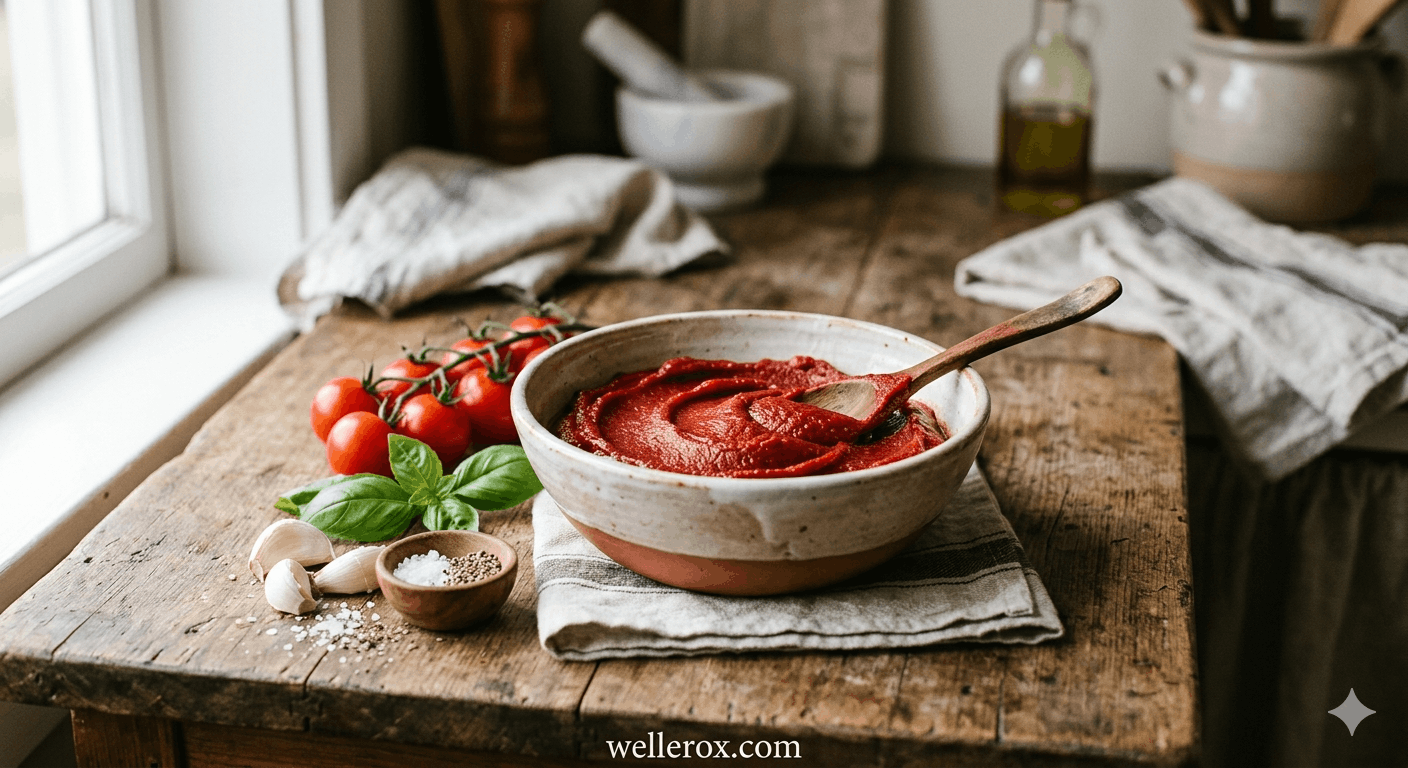
tomatoes fodmap
Sundried tomatoes: the exception
These are genuinely high FODMAP at most realistic serving sizes. 2 pieces (8g) is the limit. Nobody eats 2 pieces of sundried tomato on a pizza or in a pasta salad.
If you’re reacting to a dish that contains sundried tomatoes, is tomato low FODMAP the right question to ask? Probably not. The sundried version is a different beast.
Swap them for fresh cherry tomatoes in recipes where you can. When you can’t, leave them out.
So why are you still reacting?
If you’re eating low FODMAP tomato servings and still getting symptoms, a few other explanations are worth considering.
Cumulative load. You kept the tomato portion correct but the full meal added up. Each ingredient contributed a little fructose. Combined, they pushed you over your threshold.
Garlic and onion in the sauce. This is the most common culprit. Tomato sauce, passata, and canned tomatoes often have garlic, onion, or both added. Even traces of these can trigger symptoms in sensitive people. Read every label.
Nightshade sensitivity. Some people react to tomatoes specifically because of solanine and other compounds in the nightshade family, not FODMAPs at all. If you react to low FODMAP tomato portions and elimination of other triggers doesn’t help, this is worth exploring with a dietitian.
Acid. Tomatoes are acidic. If your gut is already inflamed or you have reflux issues, the acid load may be a problem independent of FODMAPs.
Wrong testing phase. The elimination phase is about getting a clean baseline. If you didn’t fully remove high FODMAP foods first, your results aren’t reliable.
Also Read: Is green tea low fodmap? A real guide to choosing low fodmap tea
Also Read: Low FODMAP Stuffed Baked Potatoes Recipe ( Full Guide)
FAQs
Are tomatoes low FODMAP?
Yes, most tomatoes are low FODMAP in controlled portions. Cherry tomatoes at 45g, common tomatoes at 65g, and canned tomatoes at 100g are all within safe ranges. The issue tends to be portion size, not tomatoes themselves.
Is tomato sauce low FODMAP?
Depends what’s in it. Plain tomato passata is low FODMAP at 61g. Most commercial tomato sauces contain garlic and onion, which are high FODMAP. Always read the label.
Can I eat tomatoes in Phase 1 of the FODMAP diet?
Yes, in appropriate servings. Cherry tomatoes (3 tomatoes/45g) and common tomatoes (1 small/65g) are both confirmed safe for the elimination phase by Monash University.
Why do I react to tomatoes even in small amounts?
If you’re eating low FODMAP tomato portions and still getting symptoms, the cause might not be the tomatoes. Nightshade sensitivity, cumulative FODMAP load from other foods, or hidden garlic and onion in sauces are all common explanations. A FODMAP-trained dietitian can help work through it.
Are sundried tomatoes low FODMAP?
Barely. 2 pieces (8g) is the limit. In practical cooking terms, that’s almost nothing. Sundried tomatoes are high in fructose and generally best avoided during elimination.
What tomato products should I avoid entirely?
Sundried tomatoes above 8g, any tomato sauce with garlic or onion listed in the ingredients, and tomato paste above 2 tablespoons are the main ones to watch.
Is tomato juice low FODMAP?
At 100ml, yes. Larger amounts push fructose into problem territory. Measured servings are fine.
The short version
Tomatoes are low FODMAP. Portion size is what actually matters. Cherry tomatoes at 45g, common tomatoes at 65g, canned tomatoes at 100g: all good in Phase 1. Sundried tomatoes are the exception. Tomato paste needs measuring.
If you’re still reacting on correct portions, the tomato probably isn’t the problem. Look at the full meal, the sauce ingredients, and whether something else is carrying the load.
Get a food scale. Read labels. And if you can’t figure it out, work with a registered dietitian who actually knows the FODMAP protocol. The guesswork approach takes longer and gives you less to work with.
COMMENTS