
Yes. And that single fact makes your morning ritual a lot less stressful when you’re managing IBS.
But green tea is just the start. If you’re asking “is tea low fodmap,” the full answer is more useful than a yes or no. Different teas behave differently. Some are safe at any amount. Some trip you up only at higher volumes. And a few are quietly wrecking people who think they’re doing everything right.
Here’s what you actually need to know.
What makes a tea high or low fodmap
FODMAPs are fermentable carbs that don’t digest well. They ferment in your gut instead, which causes bloating, cramping, and the kind of bathroom urgency that ruins your plans.
Most plain, unflavored teas are low fodmap because they’re steeped, not eaten. The liquid that ends up in your cup carries very little of the fermentable content from the leaves. The steeping time matters, though. A tea left steeping for 20 minutes starts pulling more compounds into the cup than one steeped for 3.
That’s the basic rule. Steep short. Drink plain. Most teas pass.
The problems show up in additives: honey, certain milk alternatives, high-FODMAP flavorings, and herbal blends that include ingredients like chicory root or apple pieces.
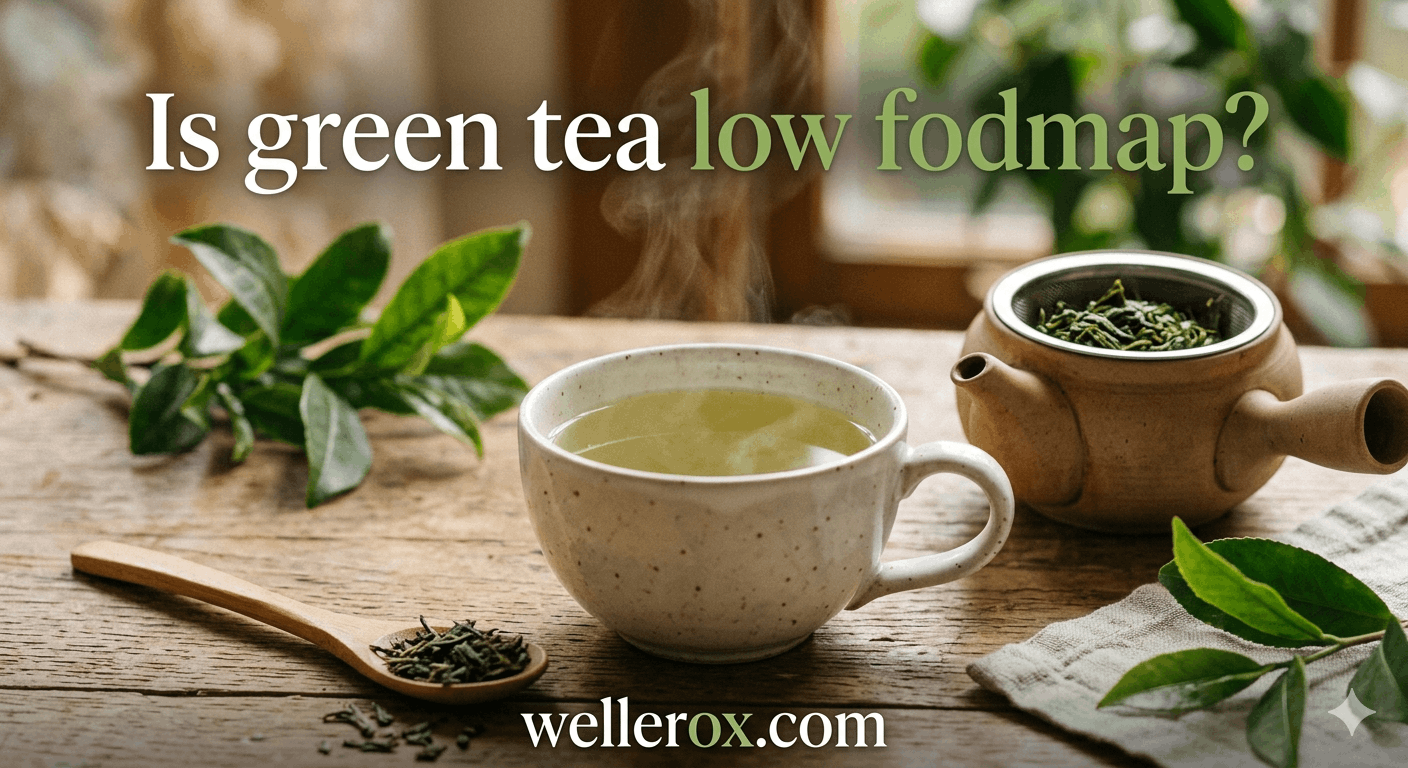
Is green tea low fodmap? Yes, consistently.
is tea low fodmap
Green tea is about as safe as it gets. Monash University (the research team that built the FODMAP testing database) has certified standard green tea as low fodmap at a 250ml serving, steeped for 3 minutes.
It’s one of the few teas tested directly, which matters. A lot of “safe” lists online are inferred, not tested. Green tea has the data behind it.
The catch: flavored green teas. Jasmine green tea, mango green tea, green tea with honey crystals baked in. Check the ingredient list before you assume the low fodmap status transfers.
Plain loose-leaf or bagged green tea? Drink it freely.
Other low fodmap teas worth knowing
Black tea
Black tea is also Monash-tested and certified low fodmap at standard serving sizes. The same 3-minute steep rule applies. Strong brewed black tea steeped for 20+ minutes hasn’t been tested at that concentration, so keep it reasonable.
If you add milk, use lactose-free dairy or a low fodmap milk alternative. Oat milk is high fodmap at most serving sizes. Almond milk is low fodmap at 125ml or less. Soy milk made from soy protein (not whole soybeans) is also fine.
White tea
White tea falls in the same category as green and black. Minimal processing, very low fodmap load. It’s made from young tea leaves and buds, steeped gently. Perfectly safe.
Peppermint tea
Peppermint tea is interesting. It’s low fodmap and it’s also one of the few things that actually helps IBS symptoms rather than just avoiding making them worse. Peppermint relaxes the smooth muscle in your gut. A cup after meals is both safe and actively useful.
Chamomile tea
Chamomile tea is low fodmap at standard servings. Some people drink it specifically for its calming effect on the gut. Just buy plain chamomile, not blends with added apple or chicory.
Ginger tea
Ginger tea made from real ginger root is low fodmap and another functionally useful one. Ginger reduces nausea and can ease gut cramping. Steep fresh ginger slices in hot water, or buy pure ginger tea bags with no additives.
Honeybush tea
It tastes floral, lightly roasted, and faintly like honey. That last part matters on a low FODMAP diet, because actual honey is off the table. Honeybush gives you that sweetness without the fructose problem.
It’s low FODMAP in both strengths and both serving sizes, which makes it one of the more forgiving options on the list. No strict steeping time rules. No size limits to stress about. Just brew and drink.
Buchu tea
Most people haven’t heard of this one. It’s native to South Africa and tastes spicy, faintly of black currant, somewhere between peppermint and rosemary. Unusual flavor, but a good one once you get used to it.
It’s low FODMAP in both serving sizes and both strengths. Same deal as honeybush. No steeping anxiety required. Traditionally, it was used for centuries to help with urinary tract infections, though it phased out once pharmaceutical antibiotics arrived. The health claims are still murky, but the FODMAP status is solid.
Weak chai tea
This one has a hard rule attached. Weak chai, steeped 1-2 minutes, is low FODMAP. Strong chai, steeped 3-5 minutes, is high FODMAP. The difference is fructans building up in the brew the longer it steeps.
Strong chai hits high FODMAP at a 250ml serving no matter how it’s served. The smaller 180ml serving lands at medium FODMAP, unless you add soy milk, which pushes it high.
So the rule is simple: steep it short, keep the cup to a standard size, and skip the soy milk. Do all 3 and you’re fine.
Teas to watch out for
Chai blends are often fine on spices but frequently include high-FODMAP ingredients in the flavoring. Some commercial chai teabags include chicory root, which is extremely high fodmap. Read the label every time.
Fruit teas and herbal blends are the wild card category. Ingredients like apple, mango, peach, and blackberry show up constantly in fruity blends. These can push an otherwise safe tea into high fodmap territory depending on how much fruit content ends up in the brew.
Dandelion tea is high fodmap. So is chicory root tea, which is sometimes marketed as a coffee substitute. Both contain fructans in significant amounts.
Oolong tea hasn’t been formally tested by Monash in the same way green and black have. Most practitioners treat it as probably low fodmap given it comes from the same plant as green and black tea. But “probably” is different from “confirmed.” If you’re in an elimination phase, stick to tested options.
The honey problem
A lot of people drink their low fodmap tea and then add a teaspoon of honey and wonder why they’re still having symptoms.
Honey is high fodmap. Even small amounts. It’s high in excess fructose, which is one of the more aggressive FODMAP triggers for people who react to it.
If you need your tea sweet, use maple syrup (up to 2 tablespoons is low fodmap) or plain white sugar (table sugar is low fodmap because glucose and fructose are equal ratio, so fructose doesn’t exceed absorption capacity).
Is tea low fodmap if it’s bottled or pre-made?
Sometimes. But bottled teas frequently contain high-FODMAP sweeteners like honey, high-fructose corn syrup, or agave. Some contain fruit juice concentrates. The base tea might be fine; the additives won’t be.
If it’s plain bottled tea with no sweetener or flavoring added, probably fine. Check the label for anything beyond tea and water.
The safest move: brew it yourself. You control the steeping time, the additives, and the serving size.
Also Read: Low FODMAP Stuffed Baked Potatoes Recipe
A practical low fodmap tea routine
Morning: green tea or black tea, plain or with lactose-free milk. Steep 3 minutes. Add sugar if needed, not honey.
After meals: peppermint or ginger tea. Both are low fodmap and genuinely help digestion.
Evening: chamomile, plain. Low fodmap and calming.
That’s a full day of safe, tested choices without overthinking it.
The part people skip
Serving size matters even for low fodmap teas. Monash tests at specific volumes, usually 250ml (roughly one standard mug). Drinking 3 mugs of even a certified low fodmap tea in quick succession could accumulate enough of certain compounds to cause symptoms.
Space your cups out. One serving at a time, with time between.
And if you’re in a strict elimination phase, run your specific tea choices by a registered dietitian who works with FODMAP protocols. The lists evolve as Monash tests more products, and individual tolerance varies more than any generalized guide can capture.
Is green tea low fodmap? Yes. Tested and confirmed.
Is tea low fodmap as a general category? Mostly, with the right choices and no high-FODMAP additions.
Stick to plain, tested varieties. Brew it yourself. Skip the honey. That’s most of what you need.
COMMENTS