
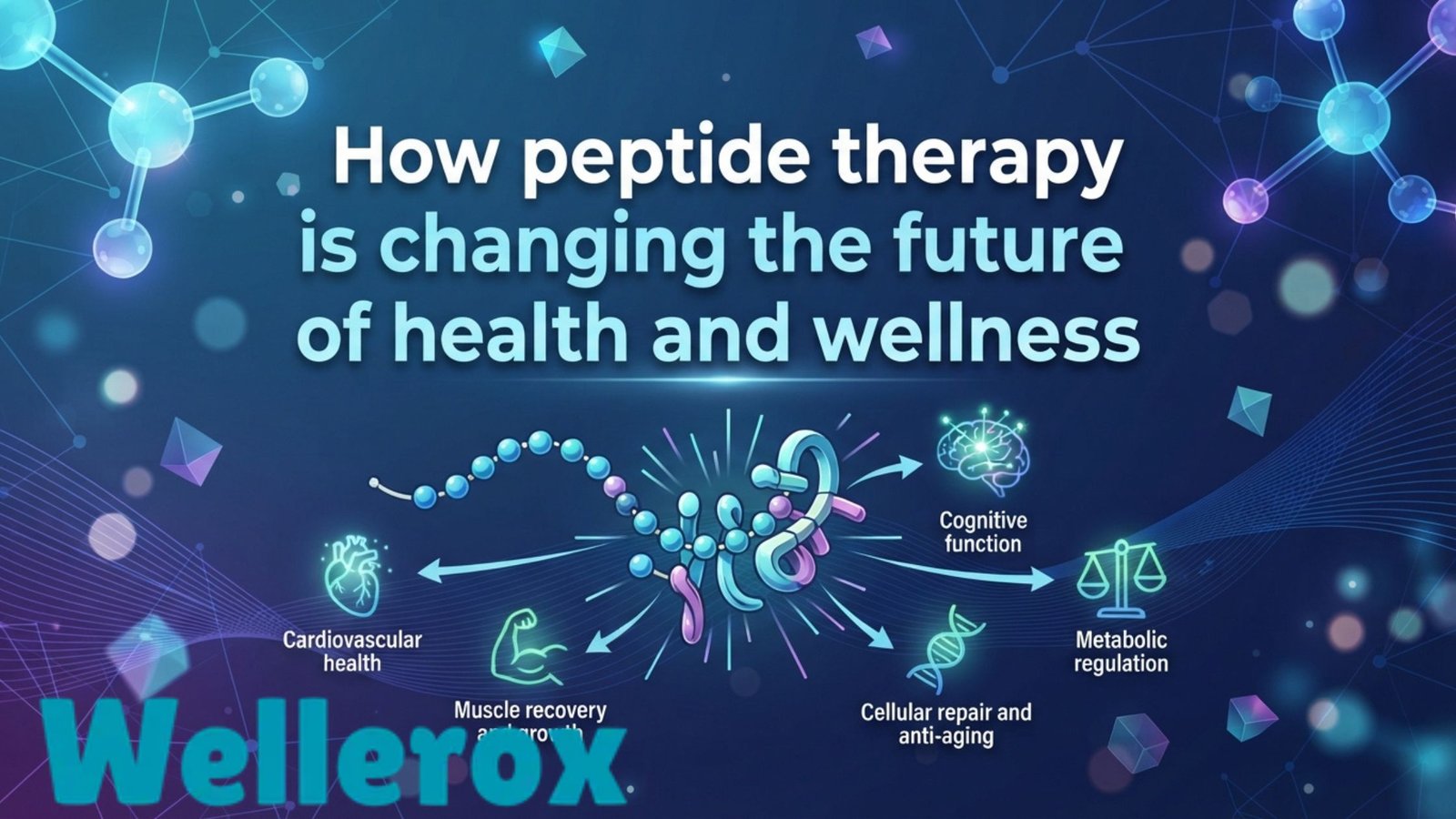
Peptides have been in medicine for over 100 years. Insulin is a peptide, and doctors first injected it into a 14-year-old boy in Toronto in January 1922.
So the buzz about peptides being “new” is a little funny.
What’s new is the scale. Weight-loss shots, enamel-repair gels, wellness clinic “stacks,” and a gray market of research vials have all landed at once. Some of it rests on huge clinical trials. Some of it runs on rat studies and forum posts.
Knowing which is which is most of the battle.
What a peptide actually is
A peptide is a short chain of amino acids. Link enough of them together (usually past 50 or so) and most scientists start calling it a protein.
Your body makes thousands of them. They work like messengers: a gland releases one, it travels, it docks on a receptor, and something happens. Insulin tells cells to pull in sugar. GLP-1 tells your brain you’ve eaten.
That precision is the whole appeal. A peptide grabs one receptor and mostly ignores the rest, so drug makers can aim at a single switch without flipping 10 others.
The catch? Your gut chews peptides up like any other protein. That’s why most peptide drugs are injections, and why oral versions took decades to crack.
The part that’s already proven
The biggest peptide story right now is GLP-1. Semaglutide (Ozempic, Wegovy) and tirzepatide (Mounjaro, Zepbound) mimic gut hormones that slow digestion and quiet appetite.
The numbers are big. In the STEP 1 trial, people on semaglutide lost about 15% of their body weight over 68 weeks. Tirzepatide’s SURMOUNT-1 trial hit roughly 21% at the top dose over 72 weeks.
Then came the SELECT trial. It found semaglutide cut major heart events by 20% in people with heart disease and excess weight. That result dragged these drugs out of the “diet shot” bucket and into cardiology clinics.
Worldwide, somewhere north of 80 peptide drugs are approved (the count depends on who’s doing it). They treat diabetes, osteoporosis (teriparatide), HIV-related belly fat (tesamorelin), and some cancers.
This is the well-documented end of peptide therapy. It’s also where most of the real change is happening.
Wellness clinics and growth hormone peptides
The other end of the market looks very different.
Walk into a longevity clinic or scroll a fitness forum and you’ll hear about growth hormone secretagogues. These peptides nudge your pituitary gland to release more of its own growth hormone.
The most popular pairing is CJC-1295 with ipamorelin. CJC-1295 mimics growth-hormone-releasing hormone and stretches the signal out. Ipamorelin mimics ghrelin and triggers sharper pulses. People take the combo hoping for deeper sleep and a leaner build.
Search online and you’ll find listings like this ipamorelin CJC-1295 blend for sale, usually shipped as a freeze-dried powder labeled for research.
Here’s where I’d slow down.
Neither peptide is FDA-approved for any use. CJC-1295 reached Phase 2 trials in the mid-2000s before development stopped. Ipamorelin was tested for gut recovery after surgery and, as far as I can tell, didn’t clear its main trial goal.
The regulation is messy too. In 2023 the FDA put both on its compounding list for substances with significant safety concerns, flagging possible immune reactions and, for CJC-1295, heart rate jumps and flushing. In April 2026 the agency pulled them off that list after the nominations were withdrawn. It didn’t call them safe, and it didn’t add them to the list pharmacies can compound from.
As I write this in October 2026, they sit in a gray zone. That could shift again.
If you’re curious, the sensible route is a doctor who’ll check your IGF-1 levels first and keep checking after. Self-dosing from an unverified vial is a much bigger gamble.
Recovery peptides and the rat problem
BPC-157 is probably the most hyped peptide on the internet. It’s a fragment of a protein found in gastric juice, and fans claim it heals tendons, guts, and pretty much everything else.
Most of that evidence comes from rodents, a big chunk of it from 1 research group in Croatia. Human trials are close to nonexistent. I’d file it under interesting and unproven.
TB-500 (a fragment of thymosin beta-4) has a similar story. Decent animal data, very little in people.
Peptides and the brain
Brain research is where peptides get hopeful and uncertain at the same time.
Cerebrolysin, a mix of peptides derived from pig brain proteins, is approved in parts of Europe and Asia for stroke and traumatic brain injury. The trials are mixed. Some show modest gains on recovery scores; some meta-analyses find little effect. The US hasn’t approved it.
Researchers are also testing peptides meant to protect neurons in the hours after an injury, when swelling and inflammation do a lot of the damage. Nothing has made it into standard care yet.
If you or someone you love is dealing with a brain injury after a car accident, start with a neurologist and a written record of every symptom. Concussion symptoms can show up days later, and that record matters for treatment and for any insurance or legal claim. Experimental peptides are a conversation for later, with that doctor.
Peptides at the dentist
This is the corner of peptide therapy I find most underrated.
A synthetic peptide called P11-4 (sold as Curodont Repair) can help reverse early tooth decay. A dentist paints it on a white-spot lesion, it seeps into the porous enamel, and it assembles into a scaffold that pulls calcium and phosphate back in. Studies show it hardening early lesions so some can skip the drill. The evidence is decent and still growing.
Dentists have also used enamel matrix derivative (Emdogain), a protein mix from developing pig teeth, for years to help regrow tissue lost to gum disease. And labs are working on antimicrobial peptides aimed at the bacteria behind cavities.
All of this depends on catching problems early. A white spot can be fixed with a gel. A cavity needs a filling. That’s the unglamorous case for keeping your dental check up Lower Hutt appointment, or whatever the local version is where you live.
Healthy enamel matters for cosmetic work too. Resin bonds straight onto the tooth surface, so anyone weighing the composite veneers Sydney clinics provide usually gets decay and gum problems sorted first.
Not every office stocks peptide enamel repair, so ask. Whether you see a family dentist or book with the Best Dental Clinic in Salem, it’s a fair question at your next visit.
Collagen, skin, and the supplement aisle
Collagen peptides are the peptides most people already own. They’re in protein bars, coffee creamers, and big tubs of powder.
The research is a mixed bag. Several trials found modest gains in skin elasticity and hydration after 8 to 12 weeks. Many were funded by supplement makers, and your gut breaks collagen into smaller fragments long before anything reaches your face.
Copper peptide (GHK-Cu) shows up in serums. The lab data looks good; the real-world results on actual faces are smaller than the labels suggest.
I’d call collagen low risk and low certainty. Fine if you like it. Don’t expect a facelift.
Where peptide therapy is heading
A few things look likely over the next 5 years.
Pills are coming. Oral semaglutide (Rybelsus) already exists, and drug makers are racing to get stronger GLP-1 drugs into tablet form. That’s a big deal for the millions of people who hate needles.
Peptides are also hitting more targets at once. Tirzepatide acts on 2 hormone receptors. Retatrutide, still in trials, acts on 3, and its Phase 2 data showed about 24% weight loss at 48 weeks.
And the gray market will probably keep growing faster than regulators can track it. That’s the part that worries me. Every semaglutide-sized success makes the unproven stuff easier to sell.
How to judge a peptide before you try it
My rough rule: the more a peptide is sold as fixing everything, the less evidence it usually has.
- Is it approved (by the FDA or your country’s regulator) for what you want it to do?
- Were the studies done in humans, and how many people were in them?
- Who’s prescribing it, and will they run labs before and after?
- Can anyone verify what’s actually in the vial?
The approved peptides are already changing medicine. The rest might, someday. Your job is to know which pile you’re reaching into.
Frequently asked questions
What Is Peptide Therapy?
Peptide therapy uses short chains of amino acids, natural or synthetic, to trigger specific actions in the body. Insulin and semaglutide are both peptide therapies.
Are Peptides FDA-Approved?
Some peptides are FDA-approved, including insulin, semaglutide, tirzepatide, and tesamorelin. Many wellness peptides, like BPC-157, CJC-1295, and ipamorelin, are not.
Is CJC-1295 With Ipamorelin Safe?
CJC-1295 with ipamorelin has limited human safety data and no FDA approval. The FDA has flagged possible immune reactions and heart rate effects.
Can Peptides Repair Tooth Enamel?
Peptide P11-4 can help remineralize early white-spot lesions in enamel. Cavities that have already formed still need a filling.
Do Collagen Peptides Work for Skin?
Collagen peptides produced modest gains in skin elasticity in some short trials. Many of those studies were funded by supplement companies.
Visit Main Page: wellerox
COMMENTS